XTND™-DIRECT
Long-range MANET Basestation
2x2 MIMO Private Networking
Doodle Labs Mesh Rider® Radio
ISM or Helix frequency bands
Easy-to-integrate Data and PoE

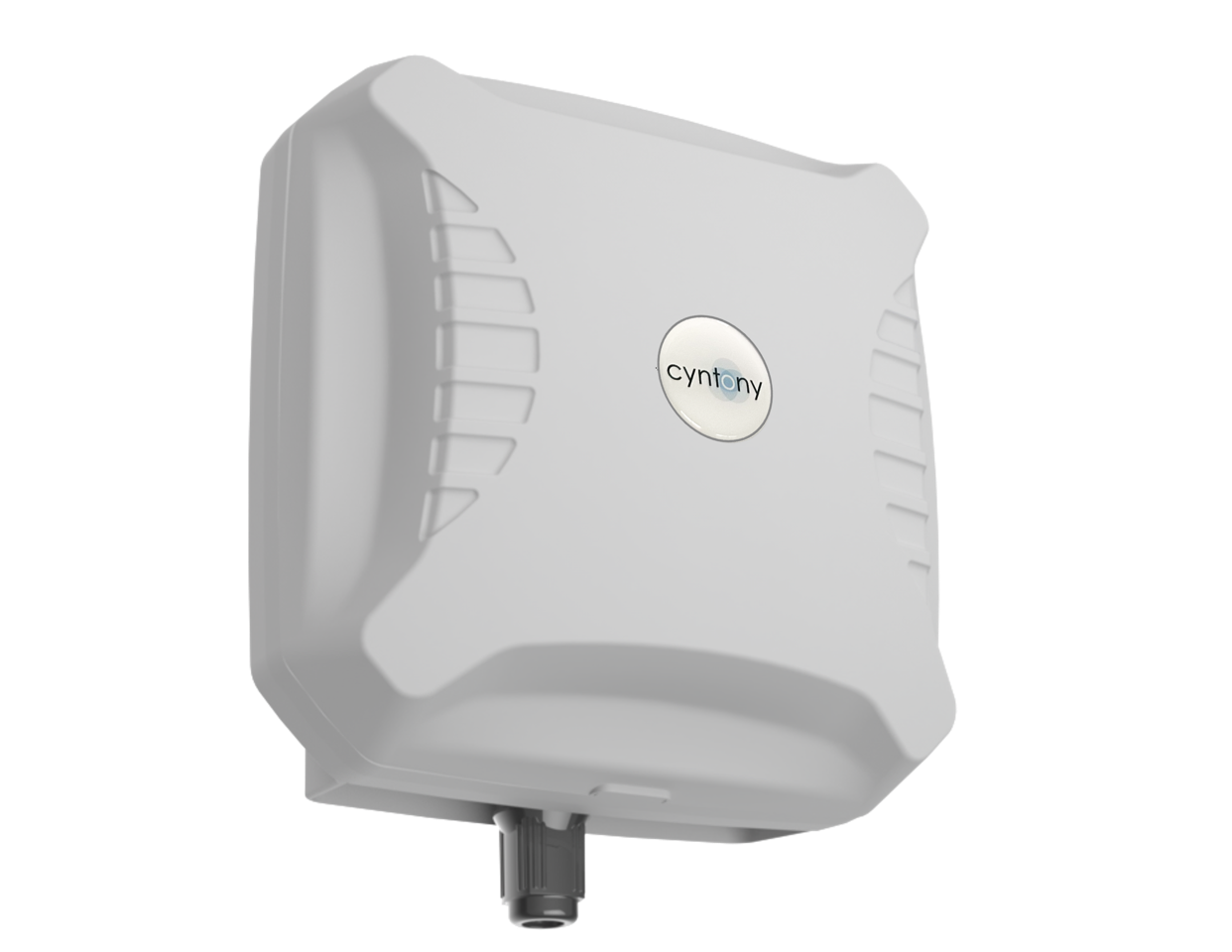
Long-range MANET Basestation
2x2 MIMO Private Networking
Doodle Labs Mesh Rider® Radio
ISM or Helix frequency bands
Easy-to-integrate Data and PoE
Download our Antenna Buyer's Guide to discover the essential specs and features to look out for while finding the perfect antenna for your project.
Search with confidence and efficiency.

The AD-17/C-1512 is a wideband VHF/UHF disc-cone antenna designed for base station and field transportable applications. It features a robust, low-weight construction from high-grade aluminum alloy, ensuring excellent resistance to atmospheric influences.
The antenna elements are made of high-grade aluminum alloy rods, protected with an irridite coating and painted with black two-component PU UV-resistant paint. This construction provides excellent resistance against atmospheric influences while maintaining a low weight.
The antenna exhibits constant gain and a stable radiation pattern over its complete frequency range of 100 to 512 MHz. It is composed of a support hub, 12 disc elements, and 12 radial (cone) elements.
Two versions are available: the AD-17/C-1512 for base station applications and the AD-17/C-1512-T for field/transportable applications.
Key technical specifications for the AD-17/C-1512:
This antenna is suitable for a variety of communication needs:
The AD-17/C-1512 is designed for flexible deployment in:
Performance highlights of the AD-17/C-1512:
The AD-17/C-1512 offers versatile setup options:
The AD-17/C-1512 is designed for seamless integration:
How do I choose an omnidirectional antenna for a specific application?
For omnidirectional antennas, consider several factors: determine if the antenna is primarily for receive-only or for transmitting various power levels (most tactical antennas handle moderate power); identify the platform it will mount to (e.g., handheld, manpack, vehicle, fixed site); specify the operational frequency, the maximum continuous power output from the transmitter, and the acceptable maximum VSWR. Also, evaluate the required gain and radiation characteristics, and whether a ground-plane dependent or independent design is preferred.
What are typical gain characteristics for omnidirectional antennas?
Omnidirectional antennas typically have gains of about 0 to 2 dBi within 20 degrees above and below the horizon for standard-sized antennas. Wideband omnidirectional antennas can exhibit gains as low as -20 dB at the lower end of their frequency range for practical structures. Higher gain omnidirectional antennas may achieve 4 to 8 dBi, but this often results in radiation patterns compressed to ten degrees or less above and below the horizon.
Why is an antenna's form factor important?
The form factor, which includes the size, weight, and mounting details of an antenna, is critical in determining its suitability for a particular use case.
HOW TO BUY
To obtain price and delivery information about this product, click the button below.

.svg)


