


Trival Antene
AD-21/2G6G — Broadband Dipole Mobile Antenna
Less than 100 W
Key specifications
- Gain
- Less than 0 dB, 0 to 2 dB
- Power handling
- Less than 100 W
- Polarization
- Vertical
Add this product to your quote to get price and delivery information.
Overview
The AD-21/2G6G is a broadband dipole mobile antenna covering the 2000 to 6000 MHz frequency range. It is intended for portable communication systems, broadband receivers, and RF jamming applications.
Technical Summary
- Frequency Range: 2000 to 6000 MHz (S and C Band)
- Gain: -3 to +1 dBi
- Power Handling: 50 W CW
- Polarization: Linear Vertical
- Antenna Type: Omnidirectional Dipole
Operational Use Cases
- RF Jamming
- Spectrum Monitoring
- Tactical Communication
Deployment Environments
Optimized for ground vehicles and tactical deployments. The robust hard plastic radome provides protection in harsh environmental conditions.
Performance Metrics
- Continuous Coverage: 2000 to 6000 MHz
- Gain Output: -3 to +1 dBi across the band
- Maximum Power: 50 W CW
Setup & Portability
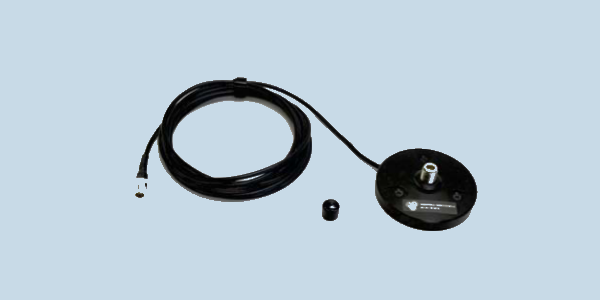
The center-fed dipole radiator is fully enclosed in a hard plastic radome. It is available with a low-profile magnetic base featuring three neodymium magnets that provide a 35 kg pull force for reliable attachment on thick-painted military vehicles. The magnet base includes an integrated 2-meter low-loss RG-58 coaxial cable. Fixed mount options are also available for permanent installations.
Compatibility
Compatible with transmitters and receivers operating in the 2 to 6 GHz range requiring a 50 W CW power capacity and vertical polarization.
FAQs
How does a dipole differ from a monopole antenna?
A monopole relies on a mounting surface ground plane to form an image antenna, whereas a dipole operates independently of the ground plane. Verify available mounting surfaces when selecting an antenna architecture.
What must be verified when matching transmitters to tactical antennas?
Ensure the maximum continuous power output of the transmitter does not exceed the antenna limits. Confirm the transmitting equipment can tolerate the maximum voltage standing wave ratio (VSWR) of the selected antenna.
How is the magnetic base option secured to a vehicle?
The available magnetic base utilizes three neodymium magnets to provide a 35 kg pull force for temporary mounting. Verify the intended mounting surface is metallic and suitable for magnetic attachment prior to deployment.
Problems we solve: how do we narrow antenna choices?
Balancing operating bands, coverage needs and mounting space can make antenna selection difficult. Share those constraints with Cyntony to compare candidate antennas and identify what needs manufacturer confirmation (Our process).
Outcomes we deliver: what changed for Espy's compact monitoring system?
Cyntony helped Espy source antennas that fitted a compact transit case and coordinated later sourcing revisions for removable mounting. This documented result concerns Espy's system; it does not establish this product's dimensions, mounting features or performance (Espy case study).
