


Trival Antene
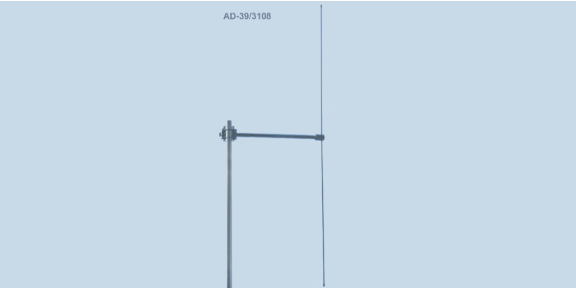
AD-39/3512 — Stationary VHF/UHF Dipole Antenna
Less than 300 W
Key specifications
- Gain
- Less than 0 dB, 0 to 2 dB
- Power handling
- Less than 300 W
- Polarization
- Vertical, Horizontal
Add this product to your quote to get price and delivery information.
Overview
The AD-39/3512 is a stationary broadband dipole antenna engineered for VHF and UHF tactical communications from 20 to 512 MHz. It is available in base station and field-transportable versions, featuring lightweight yet highly durable construction optimized for reliable operation in extreme climatic conditions.
Technical Summary
- Frequency Range: 20 to 512 MHz (HF, VHF, UHF)
- Polarization: Vertical or Horizontal (selectable by mounting)
- Power Rating: 100 W maximum
- Gain: Less than 0 dB to 2 dB
- Construction: Aluminum/plastic matching unit, brass dipoles in fiberglass, passive gain elements
Operational Use Cases
- Tactical communication base stations
- Field-transportable VHF/UHF deployments
- Stationary ground-to-ground wideband communications
Deployment Environments
- Fixed site installations and tactical field environments
- Harsh climatic conditions requiring corrosion-resistant anodized and passivated materials
Performance Metrics
- Broadband frequency coverage spans 20 to 512 MHz without tuning.
- Maximum power handling capacity of 100 W.
- Gain ranges from less than 0 dB up to 2 dB, depending on frequency.
Setup & Portability
- Includes mounting accessories to secure the unit to square or round tubes up to 60 mm in diameter.
- Designed to be mounted in either vertical or horizontal polarization configurations.
- Lightweight aluminum and plastic matching unit combined with modular fiberglass-enclosed dipoles eases transport and assembly.
FAQs
When is an omnidirectional antenna recommended for communication systems?
Omnidirectional antennas are typically selected when signal coverage is required across a broad area rather than targeted in a specific direction. Verify that the gain and frequency range meet system requirements.
How does the polarization configuration affect signal reception?
Polarization defines the orientation of the transmitted electric field. Matching the polarization of both the transmitting and receiving antennas minimizes signal loss and optimizes overall link performance.
How is the antenna secured to a support mast?
The kit includes accessories for installation on square or round tubes up to 60 mm in diameter. Confirm that the chosen mast dimensions and structural capacity accommodate the deployment.
Problems we solve: how do we narrow antenna choices?
Balancing operating bands, coverage needs and mounting space can make antenna selection difficult. Share those constraints with Cyntony to compare candidate antennas and identify what needs manufacturer confirmation (Our process).
Outcomes we deliver: what did Cyntony's tactical-link field test establish?
Cyntony's 2025 XTND-DIRECT field test showed how terrain, antenna height and clearance affected a specific mesh-radio link. The result informs deployment questions; it does not establish range, throughput or suitability for this product (Field-test account).
