


Trival Antene
AD-10/D — Wideband UHF Base Station Antenna
Less than 1 kW
Key specifications
- Frequency band
- UHF
- Power handling
- Less than 1 kW
- Polarization
- Vertical
Add this product to your quote to get price and delivery information.
Overview
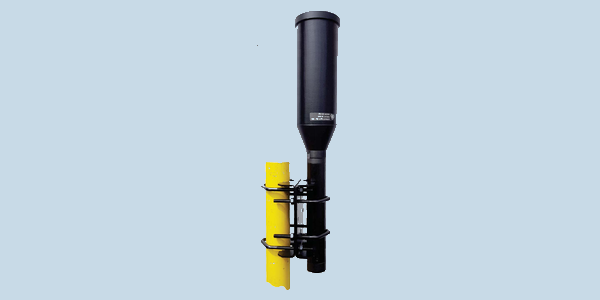
The AD-10/D is a wideband UHF center-fed dipole antenna operating from 500 to 3000 MHz. Designed primarily for base station applications, it features a radiating element enclosed in a highly durable composite radome. The entire assembly is coated with a black two-component UV-resistant polyurethane paint for reliable environmental protection.
Technical Summary
- Frequency Range: 500 - 3000 MHz
- Gain: 1 - 2.5 dBi
- Power Handling: 500 W (at 500 MHz) to 200 W (at 3000 MHz) CW
- Polarization: Vertical
- Antenna Type: Center-fed Dipole / Omni Antenna
Operational Use Cases
This wideband UHF antenna is engineered for base station installations requiring continuous coverage across the 500 to 3000 MHz spectrum. It supports high-power continuous wave (CW) transmissions, scaling from 500 watts at the low end of the band to 200 watts at the upper frequencies.
Deployment Environments
Built for rigorous outdoor environments, the AD-10/D features a rugged composite radome and a UV-resistant polyurethane finish. It is structurally rated to withstand wind speeds up to 55 m/s (200 km/h).
Performance Metrics
- Gain Performance: 1 to 2.5 dBi across the band
- Power Capacity: 500 W at 500 MHz, decreasing to 200 W at 3000 MHz (CW)
- Wind Survivability: 55 m/s (200 km/h)
Setup & Portability
The assembly consists of two main sections: a radiating element and a 40 mm diameter aluminum attachment pipe. It includes a specialized mounting console adapter designed to secure the antenna to masts with diameters up to 60 mm.
Compatibility
The antenna interfaces with RF systems via an N female coaxial connector, which is securely mounted at the base of the aluminum attachment pipe.
FAQs
What power levels are typical for tactical communications antennas?
Most tactical communications antennas support moderate transceive power levels in the scores of watts. Verify the transmitter's maximum continuous output power against the specific antenna's rated capacity.
What does vertical polarization indicate for an antenna?
Vertical polarization means the radiated electric field oscillates perpendicular to the Earth's surface. Ensure the transmitting and receiving antennas share the same polarization orientation to maximize signal coupling.
How are base station antennas typically mounted?
Base station antennas often attach to masts or elevated structures using dedicated console adapters. Confirm the manufacturer's supported mast diameters and hardware requirements for a secure installation.
Problems we solve: how do we narrow antenna choices?
Balancing operating bands, coverage needs and mounting space can make antenna selection difficult. Share those constraints with Cyntony to compare candidate antennas and identify what needs manufacturer confirmation (Our process).
Outcomes we deliver: what comes from working through the requirements?
The practical outcome is a requirements-led set of product options to evaluate with Cyntony. Confirm performance, compatibility and any service scope for your configuration before selection (Our process).
