


Trival Antene
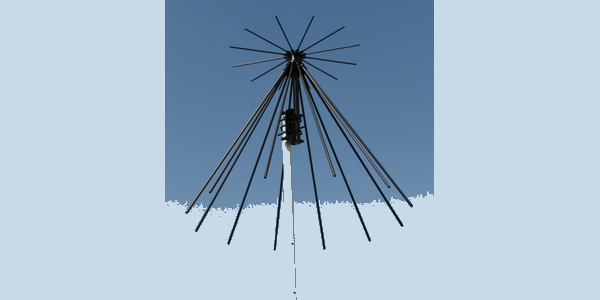
AD-17/C-1512 — Wideband VHF/UHF Disc-Cone Antenna
Less than 1 kW
Key specifications
- Power handling
- Less than 1 kW
- Polarization
- Vertical
Add this product to your quote to get price and delivery information.
Overview
The AD-17/C-1512 is a wideband VHF/UHF disc-cone antenna covering 100 to 512 MHz, manufactured by Trival Antene. Designed for base station and field-transportable tactical operations, this lightweight aluminum alloy antenna provides continuous coverage and robust performance under challenging atmospheric conditions.
Technical Summary
- Frequency Range: 100 to 512 MHz
- Maximum Power Handling: 500 W CW
- Polarization: Vertical
- Typical Gain: 2 dBi
- Antenna Type: Disc-cone (12 disc elements, 12 radial/cone elements)
Operational Use Cases
This antenna is engineered for tactical communications requiring stable omnidirectional coverage across the VHF and UHF bands. It supports both transmit and receive operations for continuous communication links in fixed and mobile defense networks.
Deployment Environments
Constructed for enduring harsh environments, the antenna utilizes high-grade aluminum alloy rods protected with an irridite coating and black two-component polyurethane UV-resistant paint. This ensures excellent resistance against atmospheric influences while maintaining a low weight for field deployments.
Performance Metrics
- Power Rating: Handles up to 500 W CW maximum power.
- Radiation Pattern: Maintains a stable radiation pattern over the complete 100 to 512 MHz range.
- Gain: Exhibits constant gain across its continuous wideband frequency coverage.
Setup & Portability
Available in a standard version (AD-17/C-1512) for base stations and a transportable version (AD-17/C-1512-T) for field applications. Despite its low weight, the structure is highly robust due to specialized element joint nuts. The system includes a mounting console allowing direct installation on masts with an outer diameter between 25 and 60 mm.
FAQs
How do I ensure an antenna can handle my transmitter's output?
Verify the transmitter's maximum continuous power output and VSWR tolerance against the antenna's datasheet. Selecting an antenna that accommodates expected power levels prevents hardware damage and minimizes reflected power.
What does vertical polarization mean for an antenna?
Vertical polarization indicates that the electric field of the radiated wave is oriented vertically relative to the earth. To ensure optimal signal strength, match the polarization of the transmitting and receiving antennas.
How do I verify mast compatibility for installation?
Confirm the manufacturer's specified mast outer diameter limits. The AD-17/C-1512 includes a mounting console designed for masts measuring between 25 and 60 mm in outer diameter.
Problems we solve: how do we narrow antenna choices?
Balancing operating bands, coverage needs and mounting space can make antenna selection difficult. Share those constraints with Cyntony to compare candidate antennas and identify what needs manufacturer confirmation (Our process).
Outcomes we deliver: what did Cyntony's tactical-link field test establish?
Cyntony's 2025 XTND-DIRECT field test showed how terrain, antenna height and clearance affected a specific mesh-radio link. The result informs deployment questions; it does not establish range, throughput or suitability for this product (Field-test account).
