


Trival Antene
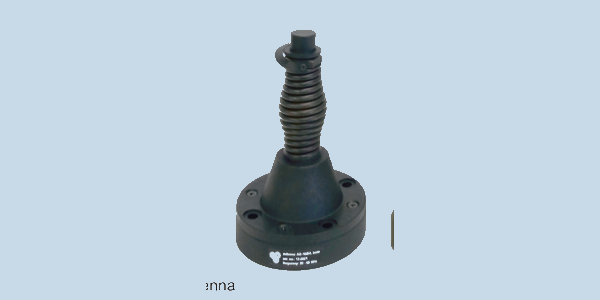
AD-18/D3 — Wideband Mobile VHF Antenna
Less than 300 W
Key specifications
| Frequency band | HF, VHF |
|---|---|
| Gain | Less than 0 dB, 0 to 2 dB |
| Power handling | Less than 300 W |
| Polarization | Vertical, RHCP |
Add this product to your quote to get price and delivery information.
Overview
The AD-18/D3 by Trival Antene is a wideband mobile VHF antenna engineered for heavy-duty tactical ground vehicle applications. Operating across the 20 to 88 MHz frequency range, it features a rugged multi-part design, a high-impact shock spring, and an optional integrated GPS L1/L2 active antenna.
Technical Summary
- Frequency Range: 20 to 88 MHz (VHF, HF)
- Power Handling: Up to 100 W CW maximum
- Gain: Typically -9 dBi to 0 dBi
- Polarization: Linear Vertical (VHF), RHCP (optional GPS)
- Mounting: 4-hole NATO standard on a 4.5-inch (114.3 mm) circle
- Finish: Military green (RAL-6014) two-component UV-resistant paint
Operational Use Cases
Primarily designed for heavy-duty tactical military communications requiring reliable VHF transmission and reception from mobile ground platforms.
Deployment Environments
Built for the hardest conditions of mobile use. A heavy-duty stainless steel spring protects the antenna against severe shock and vibration, withstanding impacts up to 20 hits on a 100 mm oak beam at 25 km/h. The composite radiating elements ensure strength and roughness in harsh outdoor environments.
Performance Metrics
The antenna operates continuously at up to 100 W CW across the 20 to 88 MHz tactical band, yielding a typical gain range of -9 dBi to 0 dBi depending on the operating frequency.
Setup & Portability
The system breaks down into four main parts for transport and assembly: an aluminum and durable plastic base, and lower, middle, and upper composite radiating elements. The base attaches securely to vehicles using a standard 4.5-inch NATO mounting footprint.
Compatibility
Compatible with heavy-duty tactical ground vehicles utilizing standard 4-hole NATO mounting configurations. The integrated optional GPS antenna supports systems requiring concurrent L1/L2 active GPS reception.
FAQs
How is this wideband mobile VHF antenna attached to a vehicle?
The antenna base features four mounting holes equally spaced on a 4.5-inch circle, which complies with standard NATO vehicle mounting configurations.
Why does gain vary across the frequency band in wideband antennas?
For practically sized structures, gain often drops at the low end of the frequency range. Verify the datasheet to confirm the -9 to 0 dBi gain profile meets system requirements across the 20 to 88 MHz band.
What does linear vertical polarization indicate for this tactical antenna?
It signifies that the emitted electric field oscillates vertically. For optimal signal transfer, ensure the communicating tactical network antennas also utilize vertical polarization to avoid mismatch loss.
Problems we solve: how do we narrow antenna choices?
Balancing operating bands, coverage needs and mounting space can make antenna selection difficult. Share those constraints with Cyntony to compare candidate antennas and identify what needs manufacturer confirmation (Our process).
Outcomes we deliver: what did Cyntony's tactical-link field test establish?
Cyntony's 2025 XTND-DIRECT field test showed how terrain, antenna height and clearance affected a specific mesh-radio link. The result informs deployment questions; it does not establish range, throughput or suitability for this product (Field-test account).
