


Trival Antene
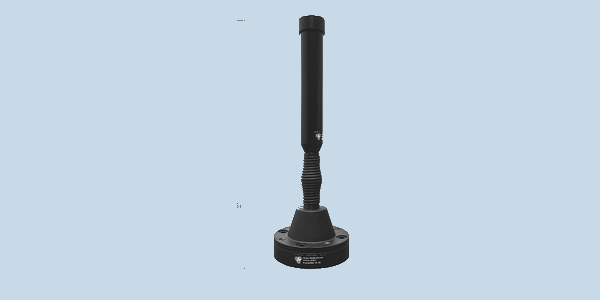
AD-18/D-1512 — Wideband Short Mobile VHF/UHF Antenna
Less than 100 W
Key specifications
- Gain
- Less than 0 dB, 0 to 2 dB, 2 to 4 dB
- Power handling
- Less than 100 W
Add this product to your quote to get price and delivery information.
Overview
The AD-18/D-1512 by Trival Antene is a wideband short mobile VHF/UHF antenna covering 100 to 512 MHz. It is built for heavy-duty mobile applications, featuring a ruggedized end-fed whip design and an option for an integrated GPS L1 antenna.
Technical Summary
- Frequency Range: 100 to 512 MHz (VHF/UHF)
- Power Handling: Up to 100 W CW
- Base Material: Aluminum and durable plastic
- Radiating Element: Composite materials
- Additional Features: Stainless steel shock spring, optional GPS L1 patch antenna with LNA
Operational Use Cases
- Heavy-duty mobile and vehicle communications
- Wideband VHF/UHF transceiving
- Simultaneous communications and GPS L1 positioning (when equipped)
Deployment Environments
- Harsh environments subject to severe impacts
- High-vibration mobile environments requiring shock absorption
Performance Metrics
- Operating Frequencies: 100 - 512 MHz
- Maximum Power: 100 W CW
Setup & Portability
The antenna base features a standard NATO 4.5-inch (114.3 mm) mounting circle. A stainless steel spring is integrated between the base and radiating element to absorb shocks and vibrations during movement.
Compatibility
- Compatible with VHF/UHF radio systems operating between 100 and 512 MHz up to 100 W CW.
- Mounts to structures supporting a NATO 4.5" (114.3 mm) bolt pattern.
- Optional GPS patch interfaces with standard GPS L1 positioning receivers.
FAQs
What parameters should be verified when selecting an antenna for a transmitter?
Verify that the antenna supports the transmitter's entire frequency range and maximum continuous output power. The antenna must also provide a well-matched impedance to keep reflected power within acceptable limits.
How does a radiation pattern describe omnidirectional antenna behavior?
The radiation pattern represents how an antenna distributes energy into three-dimensional space. While omnidirectional models provide continuous coverage in the azimuth plane, the elevation beamwidth varies depending on the specific design.
Are omnidirectional antennas universal across all mounting structures?
Although omnidirectional designs can attach to various structures, they are usually optimized for specific platforms such as vehicles or fixed sites. Verify the manufacturer's mechanical interface and grounding requirements before installation.
Problems we solve: how do we narrow antenna choices?
Balancing operating bands, coverage needs and mounting space can make antenna selection difficult. Share those constraints with Cyntony to compare candidate antennas and identify what needs manufacturer confirmation (Our process).
Outcomes we deliver: what comes from working through the requirements?
The practical outcome is a requirements-led set of product options to evaluate with Cyntony. Confirm performance, compatibility and any service scope for your configuration before selection (Our process).
