Download our Antenna Buyer’s Guide Today

Download our Antenna Buyer's Guide to discover the essential specs and features to look out for while finding the perfect antenna for your project.

Search with confidence and efficiency.
tab-img

AD-21/3108 — Wideband Low-Profile Monopole Mobile Antenna

Interested in learning more about this product?

Overview

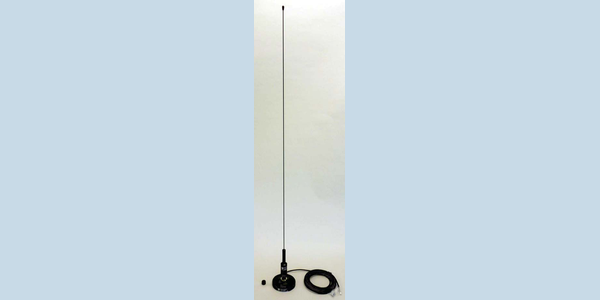
The AD-21/3108 is a wideband low-profile monopole mobile antenna operating from 30 to 108 MHz. It is designed for use with portable and mobile tactical radios, offering flexible deployment as a direct-attached or vehicle-mounted solution.

Technical Summary

  • Frequency Range: 30 to 108 MHz
  • Antenna Connector: N male
  • Base Cable: 4-meter coaxial with FME female connector (on optional bases)
  • Material: Flexible stainless steel whip with spring
  • Finish: UV protective polyurethane black paint

Operational Use Cases

  • Portable tactical radio communications
  • Mobile and vehicular radio systems

Deployment Environments

Designed for tactical mobile use and vehicular exterior applications, featuring a flexible whip with a base spring and UV protective polyurethane paint for outdoor environments.

Performance Metrics

  • Operating Frequency: 30 to 108 MHz

Setup & Portability

The two-part radiator can be attached directly to a portable radio. For vehicular setups, it mounts via the optional magnet base ADM-21/N or fixed base ADN-21/N, both of which include an integrated 4-meter coaxial cable.

Compatibility

  • Direct attachment via N male connector
  • Vehicular bases (ADM-21/N, ADN-21/N) output via FME female connector
  • Adapters from FME to N, BNC, UHF, and SMA are available on request

FAQs

  • How do deployment platforms influence the choice between monopole and dipole antennas? Selecting an antenna depends on the concept of operations and the platform's ability to provide a counterpoise. Handheld and manpack radios utilize monopoles, whereas fixed-site and portable applications utilize dipoles.
  • What radiation characteristics are common for tactical omnidirectional antennas? Omnidirectional antennas concentrate radiation toward the horizon, though specific gain varies by design and frequency. Wideband designs exhibit lower gain at the lowest end of their frequency range.
  • How is transmitter compatibility verified for tactical antennas? Compare the transmitter maximum continuous power output against the antenna rating. Verify that the transmitter tolerates the expected antenna impedance mismatch to prevent reflected power from damaging the amplifier.
  • Problems we solve: how do we narrow antenna choices? Balancing operating bands, coverage needs and mounting space can make antenna selection difficult. Share those constraints with Cyntony to compare candidate antennas and identify what needs manufacturer confirmation (Our process).
  • Outcomes we deliver: what comes from working through the requirements? The practical outcome is a requirements-led set of product options to evaluate with Cyntony. Confirm performance, compatibility and any service scope for your configuration before selection (Our process).

Video Notes

A demonstration showing the flexibility of the stainless steel whip, the spring base action, and the quick connection to the ADM-21/N magnet base would be highly useful for procurement teams assessing field durability.

HOW TO BUY
To obtain price and delivery information about this product, click the button below.