
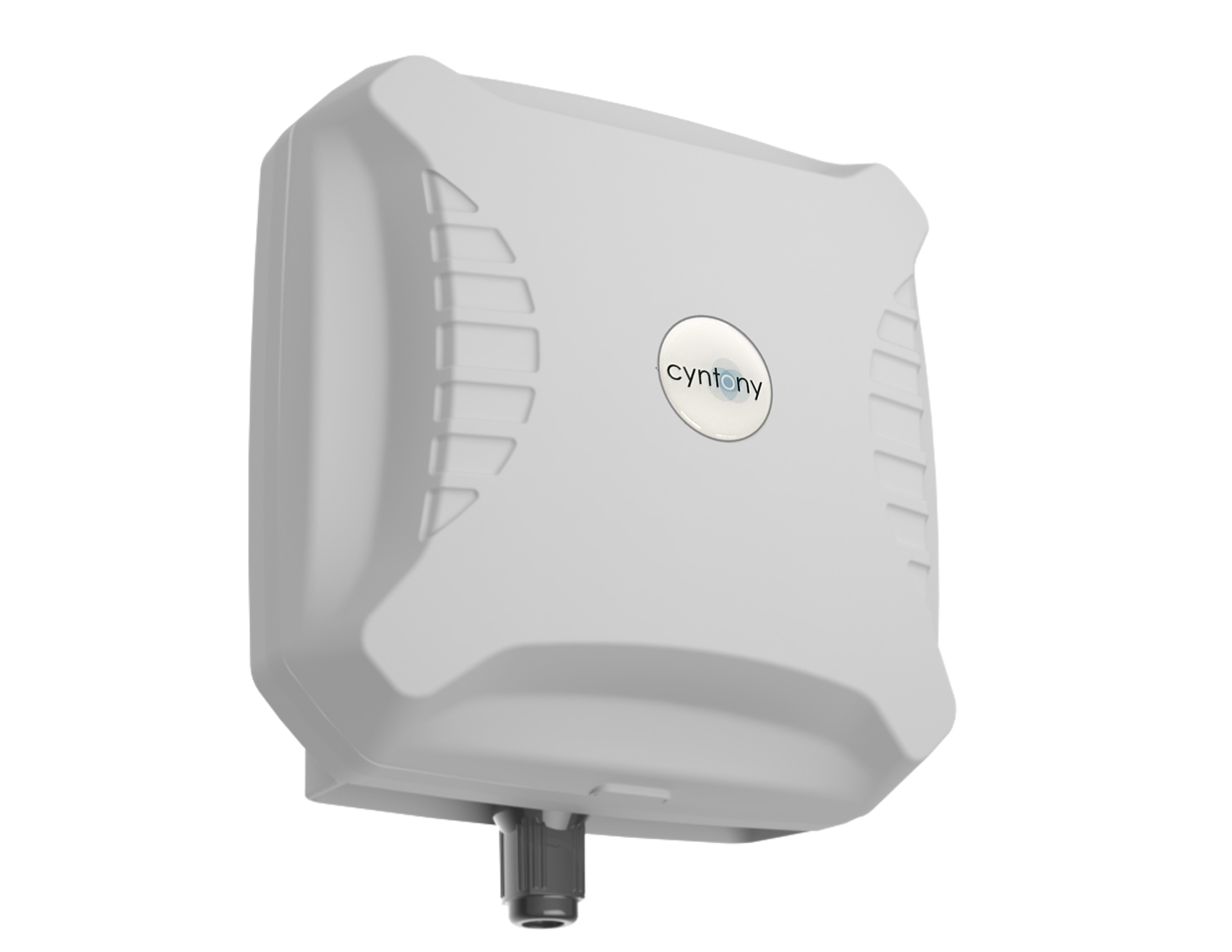



Trival Antene
AD-27/V150-3512 — Ultra Wideband Short Mobile VHF/UHF Antenna
Less than 300 W

Key specifications
- Gain
- Less than 0 dB, 0 to 2 dB
- Power handling
- Less than 300 W
Add this product to your quote to get price and delivery information.
Overview
The AD-27/V150-3512 is an ultra wideband short mobile VHF/UHF antenna operating from 30 to 512 MHz. Designed for heavy-duty mobile applications, it integrates a rugged composite radiator and a stainless steel shock-absorbing spring to endure severe physical impacts.
The aluminum and durable plastic base houses matching circuitry and an optional active GPS L1 patch antenna (AD-27/V150-3512G). The complete assembly is finished in military green (RAL-6014) two-component UV-resistant paint.
Technical Summary
- Frequency Range: 30 to 512 MHz (VHF/UHF), Optional 1575.42 MHz (L-Band GPS)
- Maximum Power Rating: 100 W CW
- Gain: -8 to +2 dB
- Polarization: Vertical (VHF/UHF), RHCP (GPS)
- Mounting: NATO standard 4.5-inch (114.3 mm) 4-hole pattern
- Finish: Military green (RAL-6014) UV-resistant paint
Operational Use Cases
This antenna is engineered for tactical communication systems requiring continuous wideband coverage across VHF and UHF frequencies. It is optimized for heavy-duty mobile deployments where constant movement and vibration demand a resilient physical structure.
Deployment Environments
Designed for ground vehicles operating in severe conditions. The composite radiating element and integrated stainless steel spring protect the antenna against high impacts, severe vibrations, and mechanical shocks encountered in heavy-duty tactical environments.
Performance Metrics
- Bandwidth: Ultra wideband continuous coverage from 30 to 512 MHz
- Gain Profile: Typically ranges from -8 to +2 dB across the operating band
- Power Handling: Rated for up to 100 W CW maximum transmit power
Setup & Portability
The system consists of two main parts: the antenna base and the radiating element. The base features four mounting holes equally spaced on a 4.5-inch (114.3 mm) circle, enabling straightforward attachment to compatible vehicle platforms.
Compatibility
The mounting base complies with the NATO standard 4.5-inch bolt pattern. The optional GPS version (AD-27/V150-3512G) supports systems requiring L1 band active GPS signals.
FAQs
Why is matching the antenna's power rating to the transmitter critical?
Using an antenna rated for the specific continuous power levels prevents physical damage. A well-matched impedance also keeps reflected power low enough to protect the transmitter amplifier.
How do vehicle platforms influence omnidirectional antenna design?
Vehicles often act as a counterpoise or ground plane for monopole antennas. Choosing between a ground-plane dependent or independent design requires evaluating the specific mounting location and co-sited equipment.
How is the spatial coverage of an antenna evaluated?
Coverage is defined by a three-dimensional radiation pattern, typically shown as elevation and azimuth planar cuts. Verify these measured principal plane patterns to confirm the energy reaches the intended operational area.
Problems we solve: how do we narrow antenna choices?
Balancing operating bands, coverage needs and mounting space can make antenna selection difficult. Share those constraints with Cyntony to compare candidate antennas and identify what needs manufacturer confirmation (Our process).
Outcomes we deliver: what did Cyntony's tactical-link field test establish?
Cyntony's 2025 XTND-DIRECT field test showed how terrain, antenna height and clearance affected a specific mesh-radio link. The result informs deployment questions; it does not establish range, throughput or suitability for this product (Field-test account).
