


Trival Antene
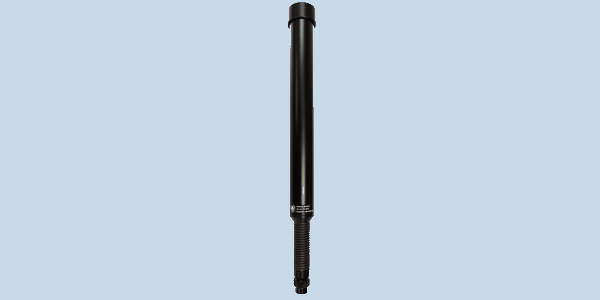
AD-55/B — UHF/SHF Dipole Antenna
Less than 100 W
Key specifications
- Gain
- Less than 0 dB, 0 to 2 dB, 2 to 4 dB
- Power handling
- Less than 100 W
- Polarization
- Vertical
Add this product to your quote to get price and delivery information.
Overview
The AD-55/B is a wideband UHF/SHF center-fed dipole antenna designed for portable communication and jamming applications. Covering a broad 400 MHz to 6000 MHz frequency range, this ruggedized antenna is optimized for all exploitation conditions without requiring additional tuning.
Technical Summary
- Antenna Type: Center-fed Dipole (Omnidirectional)
- Frequency Range: 400 MHz to 6000 MHz (UHF, S, C bands)
- Power Handling: Up to 50 W CW
- RF Connector: N-Type Male
Operational Use Cases
This antenna is engineered for tactical and field operations, specifically supporting:
- Portable communication systems
- Wideband RF jamming applications
Deployment Environments
Built to withstand demanding physical conditions, the antenna is tested against MIL-STD-810G environmental standards. The radiating element is protected within a rigid, durable polyester tube, while a stainless steel spring allows the assembly to maintain a vertical orientation during active deployment.
Performance Metrics
- Power Rating: Safely handles continuous wave (CW) power up to 50 W.
- Tuning: Electrically pre-optimized for all exploitation conditions; requires no manual tuning or matching adjustments in the field.
Setup & Portability
The hardware is composed of three modular elements for streamlined field use: a connector unit, a stainless steel spring, and the dipole radiator. This segmented design allows for efficient storage and deployment in portable scenarios.
Compatibility
Integrates directly with compatible RF transmitters, receivers, and cabling using a standard N male connector.
FAQs
What determines whether to use a monopole or a dipole antenna?
The choice depends on the deployment platform and its ability to provide a ground plane. Dipoles operate independently of a counterpoise, making them well-suited for portable applications.
How does continuous transmit power affect antenna integration?
The antenna's power rating must meet or exceed the transmitter's maximum continuous output to ensure survivability and prevent amplifier damage. This specific model handles up to 50 W CW.
Does this wideband antenna require manual tuning?
No additional tuning is required. The design is electrically optimized to operate continuously across the entire 400 to 6000 MHz frequency range.
Problems we solve: how do we narrow antenna choices?
Balancing operating bands, coverage needs and mounting space can make antenna selection difficult. Share those constraints with Cyntony to compare candidate antennas and identify what needs manufacturer confirmation (Our process).
Outcomes we deliver: what comes from working through the requirements?
The practical outcome is a requirements-led set of product options to evaluate with Cyntony. Confirm performance, compatibility and any service scope for your configuration before selection (Our process).
