Download our Antenna Buyer’s Guide Today

Download our Antenna Buyer's Guide to discover the essential specs and features to look out for while finding the perfect antenna for your project.

Search with confidence and efficiency.

tab-img

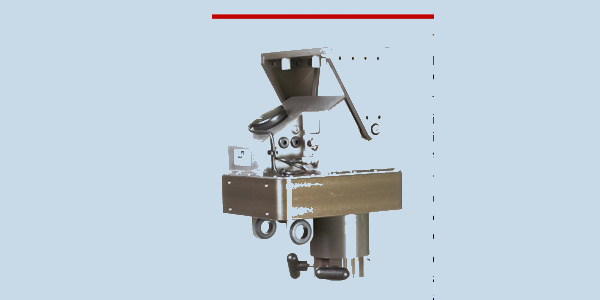
LinkAlign-360FER-20 — Auto Acquisition Antenna Positioner

Interested in learning more about this product?

Overview

The LinkAlign-360FER-20 by Nextmove Technologies is a Power Over Ethernet (PoE) antenna positioner designed to automatically point and peak directional antennas for microwave line-of-sight communications. Featuring a built-in GPS and digital compass, this positioner facilitates rapid and accurate targeting for tactical and fixed-site data links.

Technical Summary

  • Payload Capacity: Up to 70 lbs (31.8 kg), typically accommodating 2-3 ft antennas
  • Targeting System: Built-in GPS and digital compass with radio signal strength auto-peaking
  • Power Architecture: Power Over Ethernet (PoE)
  • User Interface: Web-based with a stored locations database

Operational Use Cases

This positioner is designed for establishing critical microwave line-of-sight (LOS) communications and tactical data links. Operators can utilize the stored locations database within the web interface to easily recall known target coordinates for rapid link establishment.

Deployment Environments

The system supports both tactical and fixed-site deployments. Operators can adapt the positioner to diverse field environments using optional tripods, tabletop mounts, and transit cases.

Performance Metrics

  • Azimuth Range: 360° (up to 440° of total travel)
  • Elevation Range: +120° to -20° (140° total travel)
  • Maximum Payload: 70 lbs (31.8 kg)

Setup & Portability

The positioner configures directly through a full-featured web-based user interface. For portable tactical deployments, optional transit cases, joysticks, and tripods streamline transport and field assembly. Verify bracket requirements for your specific payload.

Compatibility

The positioner is compatible with standard PoE architectures. The system can be integrated with optional polarization rotators, radio adapter brackets, and antenna adapter brackets. Confirm exact radio and antenna compatibility with the manufacturer's mechanical specifications.

FAQs

  • Why use a directional antenna for tactical communications instead of an omnidirectional one? A directional antenna reduces exposure to interception by focusing the signal, providing more secure communications. However, this creates a trade-off since directional antennas are often larger and require precise pointing mechanisms.
  • How does the positioner optimize the communication link? It utilizes a built-in GPS, digital compass, and a stored locations database to rapidly point at known targets. A final auto-peak process fine-tunes the alignment using radio signal strength.
  • What is required to mount an antenna to the positioner? Users must verify the specific mechanical attachment method for their antenna and radio. Optional adapter brackets and rotators are available, but final compatibility depends on the exact payload hardware.
  • Problems we solve: where do we start with incomplete requirements? An incomplete specification can make product selection difficult. Start by sharing the task, operating environment and known constraints with Cyntony so the team can help define what to verify and which options are worth discussing (Our process).
  • Outcomes we deliver: what comes from working through the requirements? The practical outcome is a requirements-led set of product options to evaluate with Cyntony. Confirm performance, compatibility and any service scope for your configuration before selection (Our process).

Video Notes

A brief demonstration of the web-based user interface, specifically showing the target recall and auto-peaking process, would be highly valuable for prospective buyers.

HOW TO BUY
To obtain price and delivery information about this product, click the button below.