Download our Antenna Buyer’s Guide Today

Download our Antenna Buyer's Guide to discover the essential specs and features to look out for while finding the perfect antenna for your project.

Search with confidence and efficiency.

tab-img

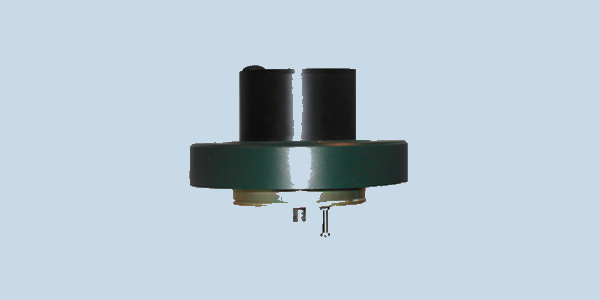
MB400 — Low Profile Vehicular TETRA Antenna

Interested in learning more about this product?

Overview

The MB400 is a highly compact TETRA antenna engineered specifically for vehicular and shelter deployments. Measuring under 80 mm in height, it provides a reliable communication solution for applications where maintaining a minimal physical footprint is critical.

Technical Summary

  • Design: Radome-protected monopole
  • Frequency Range: 385 to 420 MHz (UHF)
  • Polarization: Vertical
  • Radiation Pattern: Omnidirectional

Operational Use Cases

This antenna supports TETRA network communications in settings requiring a minimal vertical footprint, such as low-clearance vehicular operations and compact transportable shelters.

Deployment Environments

Suitable for mobile and fixed environments, specifically optimized for vehicles and shelters that require a rugged, low-profile exterior antenna.

Performance Metrics

  • Operating Frequency: 385–420 MHz
  • Maximum Height: < 10 cm (80 mm)

Setup & Portability

The radome-protected monopole must be installed on a conductive ground plane to function properly. Its 80 mm height minimizes overhead clearance requirements during transit or operation.

Compatibility

The base is designed for integration utilizing standard 4-hole US or 3/6-hole NATO pattern mounts.

FAQs

  • Why does a monopole antenna require a ground plane? Monopole antennas depend on a conductive surface beneath them to act as a counterpoise. This surface reflects energy to complete the radiating structure and achieve the intended performance.
  • What factors matter when selecting an antenna for a specific transmitter? Confirm the antenna operates across the required frequencies and handles the maximum continuous transmit power. Proper VSWR matching keeps reflected power below levels that could damage the amplifier.
  • What does vertical polarization indicate? Vertical polarization describes the vertical orientation of the electric field radiated by the antenna. To minimize signal loss, both the transmitting and receiving antennas should use matching polarization.
  • Problems we solve: how do we narrow antenna choices? Balancing operating bands, coverage needs and mounting space can make antenna selection difficult. Share those constraints with Cyntony to compare candidate antennas and identify what needs manufacturer confirmation (Our process).
  • Outcomes we deliver: what comes from working through the requirements? The practical outcome is a requirements-led set of product options to evaluate with Cyntony. Confirm performance, compatibility and any service scope for your configuration before selection (Our process).

Video Notes

A brief overview video demonstrating the low-profile design and standard NATO/US mounting hole alignment on a vehicle surface would be highly beneficial.

HOW TO BUY
To obtain price and delivery information about this product, click the button below.