Download our Antenna Buyer’s Guide Today

Download our Antenna Buyer's Guide to discover the essential specs and features to look out for while finding the perfect antenna for your project.

Search with confidence and efficiency.

tab-img

RM-3625 — Embedded/External Mesh Rider Radio

Interested in learning more about this product?

Overview

The Doodle Labs RM-3625 is an advanced 2x2 MIMO Mesh Rider Radio operating in the 3.5 GHz CBRS band. It provides the essential building blocks for deploying license-free, high-performance, and interference-resistant private broadband networks for tactical and secure communications.

Technical Summary

  • Frequency Band: 3.5 GHz CBRS (3550-3700 MHz)
  • Architecture: 2x2 MIMO Mesh Router
  • Waveform: Interference-resistant COFDM
  • Encryption: FIPS Certified AES 256- and 128-bit
  • RF Output Power: Less than 10 W (Maximum 1.0 W / 30 dBm)
  • Compliance: FCC Part 96

Operational Use Cases

This mesh router is designed for secure data links and tactical communications. Its Ultra-Reliable Low Latency Channel (URLLC) is highly suited for robust Command and Control (C2) operations in challenging RF environments.

Deployment Environments

The RM-3625 supports diverse deployment environments, accommodating tactical scenarios, fixed site infrastructure (as a CBSD/Gateway), and handheld or wearable applications (as an End User Device).

Performance Metrics

  • Throughput: Up to 100 Mbps
  • Range: Field tested at distances greater than 100 km
  • Latency: Supports ultra-reliable low latency transmissions

Setup & Portability

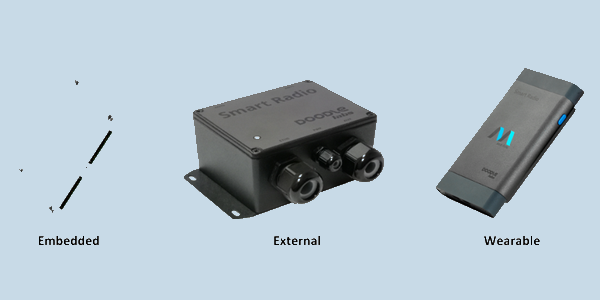
To meet application-specific integration requirements, this radio is available in Embedded, External, and Wearable form factors.

Compatibility

The RM-3625 is fully compliant with FCC Part 96 regulatory requirements and integrates seamlessly into 3.5 GHz CBRS private broadband network architectures as a CBSD/Gateway or End User Device (EUD).

FAQs

  • What frequency band does this mesh router operate in? It operates in the 3.5 GHz CBRS band, covering 3550 to 3700 MHz for private broadband networking.
  • How does the radio secure tactical communications? The system utilizes FIPS-certified AES 128-bit and 256-bit encryption alongside an interference-resistant COFDM waveform.
  • Why might a directional antenna be preferred for tactical networks? Friendly communications broadcast in all directions can be intercepted. A directional antenna reduces this exposure, though it may require specific mounting or form factors.
  • Problems we solve: where do we start with incomplete requirements? An incomplete specification can make product selection difficult. Start by sharing the task, operating environment and known constraints with Cyntony so the team can help define what to verify and which options are worth discussing (Our process).
  • Outcomes we deliver: what comes from working through the requirements? The practical outcome is a requirements-led set of product options to evaluate with Cyntony. Confirm performance, compatibility and any service scope for your configuration before selection (Our process).

Video Notes

Consider capturing visual examples of the different form factors (Embedded, External, Wearable) and demonstrating the basic physical integration differences for OEM applications.

HOW TO BUY
To obtain price and delivery information about this product, click the button below.