XTND™-DIRECT
Long-range MANET Basestation
2x2 MIMO Private Networking
Doodle Labs Mesh Rider® Radio
ISM or Helix frequency bands
Easy-to-integrate Data and PoE


Long-range MANET Basestation
2x2 MIMO Private Networking
Doodle Labs Mesh Rider® Radio
ISM or Helix frequency bands
Easy-to-integrate Data and PoE
Download our Antenna Buyer's Guide to discover the essential specs and features to look out for while finding the perfect antenna for your project.
Search with confidence and efficiency.

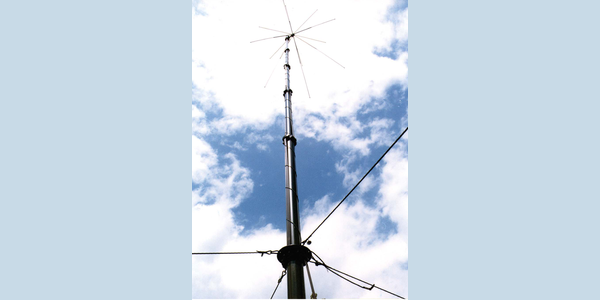
The STV Series consists of telescopic winch-operated composite masts designed for harsh military environments. These highly durable structures offer reliable elevation for communication systems, featuring hand or motorized deployment options and an integrated automatic safety brake.
Constructed from pultruded composite materials, these masts deliver exceptional longitudinal stability, elasticity, and high radial hardness. The design includes four specialized longitudinal guideways that ensure smooth deployment and prevent section rotation. Erection is driven by a removable hand or motor-operated winch (STV-EW) utilizing a cogwheel transmission and reinforced polyester-aramide belts. Lowering is managed by a built-in automatic switch mechanism, eliminating the need for manual switching.
Engineered for extreme conditions, the STV Series is suitable for both field and vehicular applications. The masts are MIL-STD-810 compliant for harsh military environments and carry CE certification.
The STV Series is supplied with all necessary field erection accessories for immediate deployment. The standard kit includes dyneema guying ropes, ground anchors, and a base plate. The removable winch system allows for flexible setup and breakdown in mobile operations.
The anti-rotation guideways make this mast system highly compatible with directional antennas requiring fixed azimuth orientation. It supports both manual and motorized (STV-EW) winch modules.
Editorial Note: A field deployment video demonstrating the winch operation (hand vs. motorized STV-EW), anti-rotation guideways, and the installation of the guying ropes and base plate would be highly beneficial for this product page.
HOW TO BUY
To obtain price and delivery information about this product, click the button below.

.svg)


