Download our Antenna Buyer’s Guide Today

Download our Antenna Buyer's Guide to discover the essential specs and features to look out for while finding the perfect antenna for your project.

Search with confidence and efficiency.

tab-img

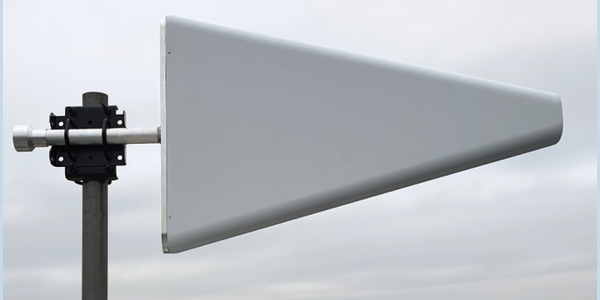
AD-22/G — Log-Periodic Dipole Antenna

Interested in learning more about this product?

Overview

The AD-22/G is a robust log-periodic dipole antenna engineered for a wide frequency range of 400 to 6000 MHz. Enclosed in an IP65-rated fiberglass housing, this antenna protects its brass and silver-plated boom and 19-dipole structure from environmental elements. Delivering a typical gain of 8 dBi and handling up to 200 W CW, it is built for transportable or stationary deployment in demanding RF applications.

Technical Summary

  • Frequency Range: 400 to 6000 MHz (UHF, L, S, C bands)
  • Gain: 8 dBi typical
  • Power Handling: Up to 200 W CW
  • Polarization: Horizontal and Vertical
  • Environmental Rating: IP 65
  • Internal Construction: Silver-plated brass boom and 19 dipoles

Operational Use Cases

The AD-22/G is specifically designed to support the following RF applications:

  • Radio Monitoring
  • Signal Jamming
  • Electromagnetic Compatibility (EMC) Testing
  • Broadcast operations

Deployment Environments

Designed for versatile deployment, this antenna supports both fixed site and tactical platforms. Its IP65-rated fiberglass housing ensures reliable internal protection against environmental conditions during either stationary or transportable operations.

Performance Metrics

  • Frequency Band Coverage: Spans UHF, L, S, and C bands continuously from 400 to 6000 MHz.
  • Gain: Delivers a typical gain of 8 dBi.
  • Power Capacity: Safely handles maximum continuous wave (CW) power up to 200 W.

Setup & Portability

The antenna includes a dedicated support designed for rapid mast mounting. To ensure a secure fit for transportable or stationary setups, verify that the intended mounting structure has an outer diameter between 1 inch (26 mm) and 2 inches (60 mm).

FAQs

  • What is the advantage of using a log-periodic dipole antenna? A log-periodic dipole antenna delivers directional coverage by concentrating radiated power in a specific direction. This enhances signature management and improves operational range compared to an omnidirectional antenna.
  • How does polarization affect communication links? Antennas with matching polarization states provide the optimal transmission and reception path. Using a receiver with the same linear polarization orientation maximizes signal strength and minimizes cross-polarization loss.
  • What mounting hardware is required for installation? Verify that the deployment site has a compatible mast. This antenna features a support designed specifically for attachment to masts with an outer diameter ranging from 26 mm to 60 mm.
  • Problems we solve: how do we narrow antenna choices? Balancing operating bands, coverage needs and mounting space can make antenna selection difficult. Share those constraints with Cyntony to compare candidate antennas and identify what needs manufacturer confirmation (Our process).
  • Outcomes we deliver: what comes from working through the requirements? The practical outcome is a requirements-led set of product options to evaluate with Cyntony. Confirm performance, compatibility and any service scope for your configuration before selection (Our process).

Video Notes

Editorial Note: Consider adding a short video demonstrating the mast attachment process for 26 mm to 60 mm diameters, and an animation illustrating a typical directional LPDA radiation pattern.

HOW TO BUY
To obtain price and delivery information about this product, click the button below.