Download our Antenna Buyer’s Guide Today

Download our Antenna Buyer's Guide to discover the essential specs and features to look out for while finding the perfect antenna for your project.

Search with confidence and efficiency.
tab-img

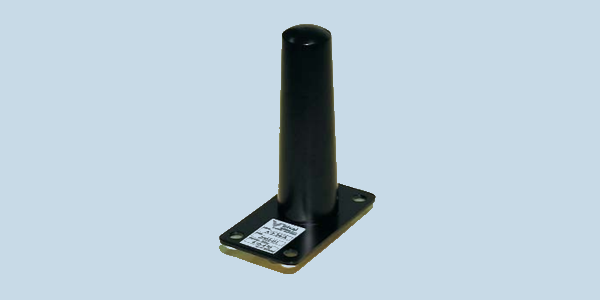
AD-24/A — Wideband UHF Monopole Vehicle Antenna

Interested in learning more about this product?

Overview

The AD-24/A is a rugged wideband monopole vehicle antenna operating in the 430 to 470 MHz UHF frequency range. Built for heavy transportation, its mechanical construction is highly optimized to endure the extreme vibrations and shocks generated by locomotive engines and similar industrial vehicles.

Technical Summary

  • Frequency Range: 430 to 470 MHz
  • Antenna Type: Monopole
  • Impedance: 50 ohms
  • VSWR: Less than 1.5
  • Connector: N-type coaxial (with protective washer)
  • Radome Material: Epoxy-glass composite

Operational Use Cases

Primarily designed for tactical communication and heavy industrial transportation. It supports continuous wave transmissions up to 100 W, ensuring reliable voice and data links for locomotive engines operating in demanding conditions.

Deployment Environments

Engineered for harsh outdoor mechanical environments, this antenna withstands extreme shocks and heavy vibrations. It features fully waterproofed radiating elements, handles wind velocities up to 180 km/h, and operates reliably in temperatures ranging from -40 to +70 °C.

Performance Metrics

  • Gain: 2 to 3 dBi
  • Power Handling: 100 W (Continuous Wave)
  • VSWR: < 1.5
  • Polarization: Vertical

Setup & Portability

Designed for straightforward installation, the AD-24/A features a mounting plate integrated directly with the N-type coaxial connector. This allows the antenna to be conveniently mounted directly onto any flat metal surface.

Compatibility

Compatible with standard 50-ohm RF systems operating in the 430 to 470 MHz UHF band. The base utilizes an industry-standard N-type coaxial connector for integration with compatible transceivers and cabling.

FAQs

  • How should an omnidirectional antenna be selected for tactical communications? Verify the required frequency range and the maximum continuous transmit power of the connected radio. Proper specification matching keeps reflected power within acceptable limits for the amplifier.
  • What does a vertical polarization specification indicate? It indicates that the electric field is oriented vertically. Connect this antenna to systems that also utilize vertical polarization to maximize signal transfer and prevent polarization mismatch loss.
  • What is a critical consideration when installing a monopole vehicle antenna? Verify if the antenna requires a ground plane. Monopoles typically need a conductive flat metal surface, such as a vehicle roof, to act as a counterpoise for proper electrical function.
  • Problems we solve: how do we narrow antenna choices? Balancing operating bands, coverage needs and mounting space can make antenna selection difficult. Share those constraints with Cyntony to compare candidate antennas and identify what needs manufacturer confirmation (Our process).
  • Outcomes we deliver: what did Cyntony's tactical-link field test establish? Cyntony's 2025 XTND-DIRECT field test showed how terrain, antenna height and clearance affected a specific mesh-radio link. The result informs deployment questions; it does not establish range, throughput or suitability for this product (Field-test account).

Video Notes

Consider capturing a brief technical demonstration showing the physical dimensions of the conical radome and the integrated flat metal mounting plate with the N-type connector.

HOW TO BUY
To obtain price and delivery information about this product, click the button below.