Download our Antenna Buyer’s Guide Today

Download our Antenna Buyer's Guide to discover the essential specs and features to look out for while finding the perfect antenna for your project.

Search with confidence and efficiency.
tab-img

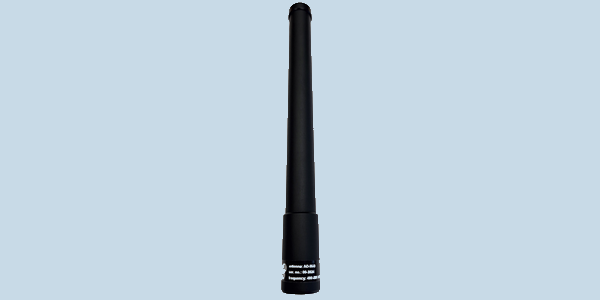
AD-55/D — Wideband UHF Manpack Dipole Antenna

Interested in learning more about this product?

Overview

The AD-55/D is a rugged, wideband manpack antenna designed for modern software-defined radios (SDRs), jammers, and scanners. Operating over the 400 to 800 MHz UHF range, it utilizes a center-fed sleeve dipole design fully enclosed in a durable fiberglass radome to withstand harsh military environments.

Technical Summary

  • Frequency Range: 400 to 800 MHz (UHF)
  • Power Handling: 200 W CW maximum
  • Gain: +1 to +3 dBi
  • Polarization: Vertical
  • Design: Center-fed sleeve dipole (no ground plane required)

Operational Use Cases

  • Jamming: Supports continuous high-power electronic warfare applications with 200 W CW power handling.
  • Monitoring: Provides wideband coverage for broadband scanners and signal detection equipment.
  • Tactical Communication: Integrates with modern SDRs for reliable field communications.

Deployment Environments

The antenna is fully enclosed in a rugged fiberglass radome and is compliant with rigorous MIL-STD-810G environmental specifications, ensuring reliable operation in the harshest military and field conditions.

Performance Metrics

The AD-55/D delivers continuous coverage across the 400 to 800 MHz frequency band with a stated gain of +1 to +3 dBi. It handles up to 200 W of continuous wave (CW) power.

Setup & Portability

Categorized as a manpack platform antenna, its center-fed sleeve dipole architecture allows it to operate effectively without the presence of a ground plane, simplifying field deployment.

Compatibility

Intended for use with modern broadband software-defined radios (SDRs), electronic warfare jammers, and monitoring scanners operating within the UHF 400 to 800 MHz range.

FAQs

  • How does a sleeve dipole differ from a monopole design? A dipole antenna operates without requiring a ground plane. A monopole relies on an underlying conductive surface to act as an image antenna and complete its radiation structure.
  • How is continuous wave (CW) power handling evaluated during selection? Compare the antenna's CW rating against the maximum continuous output of the connected transmitter. Selecting a properly rated antenna prevents damage when transmitting continuously.
  • Why are principal plane patterns necessary for evaluating coverage? Antennas radiate energy three-dimensionally, so single-value gain metrics do not fully describe spatial distribution. Review the elevation and azimuth pattern cuts to determine where the energy is directed and whether nulls exist.
  • Problems we solve: how do we narrow antenna choices? Balancing operating bands, coverage needs and mounting space can make antenna selection difficult. Share those constraints with Cyntony to compare candidate antennas and identify what needs manufacturer confirmation (Our process).
  • Outcomes we deliver: what changed for Espy's compact monitoring system? Cyntony helped Espy source antennas that fitted a compact transit case and coordinated later sourcing revisions for removable mounting. This documented result concerns Espy's system; it does not establish this product's dimensions, mounting features or performance (Espy case study).

Video Notes

Editor's note: Consider adding a short video demonstrating a typical manpack deployment and illustrating the operational advantage of an antenna that does not require a ground plane.

HOW TO BUY
To obtain price and delivery information about this product, click the button below.