XTND™-DIRECT
Long-range MANET Basestation
2x2 MIMO Private Networking
Doodle Labs Mesh Rider® Radio
ISM or Helix frequency bands
Easy-to-integrate Data and PoE


Long-range MANET Basestation
2x2 MIMO Private Networking
Doodle Labs Mesh Rider® Radio
ISM or Helix frequency bands
Easy-to-integrate Data and PoE
Download our Antenna Buyer's Guide to discover the essential specs and features to look out for while finding the perfect antenna for your project.
Search with confidence and efficiency.

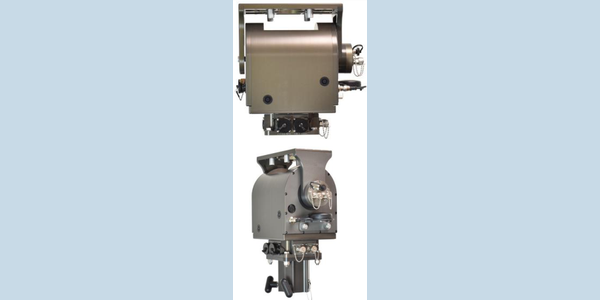
The LinkAlign-360VPR-20 is a Power Over Ethernet (PoE) antenna positioner engineered to automatically point and peak directional antennas. It integrates a built-in GPS and digital compass to support microwave, millimeter-wave line-of-sight, and satellite communications.
Designed for establishing high-bandwidth data links and secure communications, the positioner utilizes a stored locations database for easy recall of known target coordinates. The system finalizes alignment with an auto-peak function driven by real-time radio signal strength.
This positioner is classified for fixed site and tactical platform applications requiring rapid, precise antenna pointing.
The standard unit provides 360° of azimuth and +/-95° of elevation travel while supporting payloads up to 50 lbs (22.68 kg). Optional encoders can be added to improve pointing accuracy and feedback resolution across both axes.
Setup is managed through a full-featured web-based user interface, allowing for rapid configuration. The system relies on a single PoE connection to minimize complex cabling during deployment.
The positioner is compatible with directional microwave, millimeter-wave, and satellite antennas typically up to 2 feet in diameter. Continuous azimuth motion options require compatibility verification for the integrated slip ring and RF rotary joint.
HOW TO BUY
To obtain price and delivery information about this product, click the button below.

.svg)


