Download our Antenna Buyer’s Guide Today

Download our Antenna Buyer's Guide to discover the essential specs and features to look out for while finding the perfect antenna for your project.

Search with confidence and efficiency.

tab-img

RM-2250 — Series Embedded/External Mesh Rider Radio

Interested in learning more about this product?

Overview

The Doodle Labs RM-2250 Series Mesh Rider Radio is an advanced 2x2 MIMO mesh router designed for seamless plug-and-play integration into IIoT, drone, and robotic systems. Operating in the 2200-2300 MHz S-band, it utilizes patented Mesh Rider® technology and interference-resistant COFDM to deliver bi-directional telemetry and optimized 4K video over a single broadband RF channel.

Technical Summary

  • Frequency Band: 2200-2300 MHz (S-band)
  • Architecture: 2x2 MIMO mesh router with self-healing mobile routing
  • Modulation: Interference-resistant COFDM
  • Security: AES 128/256-bit encryption (FIPS 140-3 certification option available)
  • Latency: Ultra-Reliable Low Latency Channel (URLLC) support

Operational Use Cases

  • Unmanned Systems: Command and control (C2) and high-definition telemetry for drones and autonomous ground vehicles.
  • Tactical Communications: Secure, self-forming mobile mesh networking for law enforcement and defense applications.
  • Industrial IoT: Reliable broadband data links for automated robotic systems requiring low latency.

Deployment Environments

Engineered for demanding operational conditions across airborne, ground vehicle, and tactical platforms. The radio meets MIL-STD-810H standards for high shock and vibration, ensuring robust performance in rugged mobile environments.

Performance Metrics

  • Video Performance: Optimized for 4K video streaming with unicast and multicast support.
  • Link Reliability: Utilizes an Ultra-Reliable Low Latency Channel (URLLC) to maintain continuous C2 links.
  • Form Factor: Engineered for a very low Size, Weight, Power, and Cost (SWaP-C) profile.

Setup & Portability

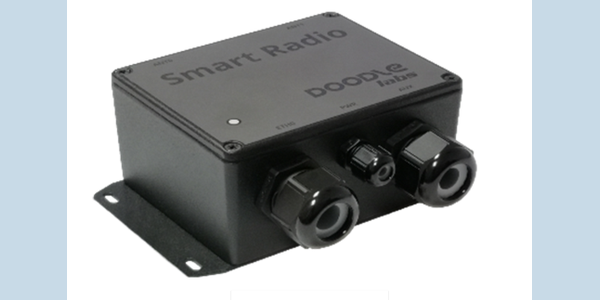
Designed for plug-and-play integration, this radio is available in both embedded and external form factors. Its low SWaP-C profile facilitates straightforward installation into space-constrained mobile platforms and robotic systems.

FAQs

  • How does antenna selection impact tactical communication security? Omnidirectional antennas provide broad coverage but broadcast signals in all directions, increasing interception risk. Selecting a directional antenna reduces this exposure but often introduces different mounting and form factor requirements.
  • What is the purpose of the Ultra-Reliable Low Latency Channel (URLLC)? The URLLC feature is designed to reduce transmission latency for critical command and control data. This prioritization supports rapid telemetry processing in autonomous systems and drone platforms.
  • How should users choose between embedded and external form factors? Embedded modules generally fit inside space-constrained internal bays, while external units provide standalone enclosures. Verify the host platform's size, thermal management, and physical interface requirements before selecting a configuration.
  • Problems we solve: where do we start with incomplete requirements? An incomplete specification can make product selection difficult. Start by sharing the task, operating environment and known constraints with Cyntony so the team can help define what to verify and which options are worth discussing (Our process).
  • Outcomes we deliver: what comes from working through the requirements? The practical outcome is a requirements-led set of product options to evaluate with Cyntony. Confirm performance, compatibility and any service scope for your configuration before selection (Our process).

Video Notes

A short video demonstrating the plug-and-play integration of the embedded module into a drone, or an animation illustrating the self-healing COFDM mesh network in a tactical scenario, would enhance this page.

HOW TO BUY
To obtain price and delivery information about this product, click the button below.